This blog article was posted at a much later date than when the original video was posted. As a result, prices, descriptions, product availability, and specifications may differ between the time of the video and when you are reading this.
DISCLOSURE: This article may contain affiliate links. By clicking on them you help support me to put more content out with no additional cost to you. This was sent to me by Sintercore to do a review on. No exchange of money was given and no promises of good reviews occurred.
Sintercore R3 Universal Scope Throw Lever – Install and Review
If you'd rather watch the full install and overview in action, you can watch the video here:
In this post, I’m going over the Sintercore R3 universal scope throw lever, including installation and some quick first impressions. This is a universal design that works with just about any scope magnification ring, which makes it a really flexible option compared to model-specific throw levers.
What Comes in the Package
The throw lever comes with everything you need to get started:
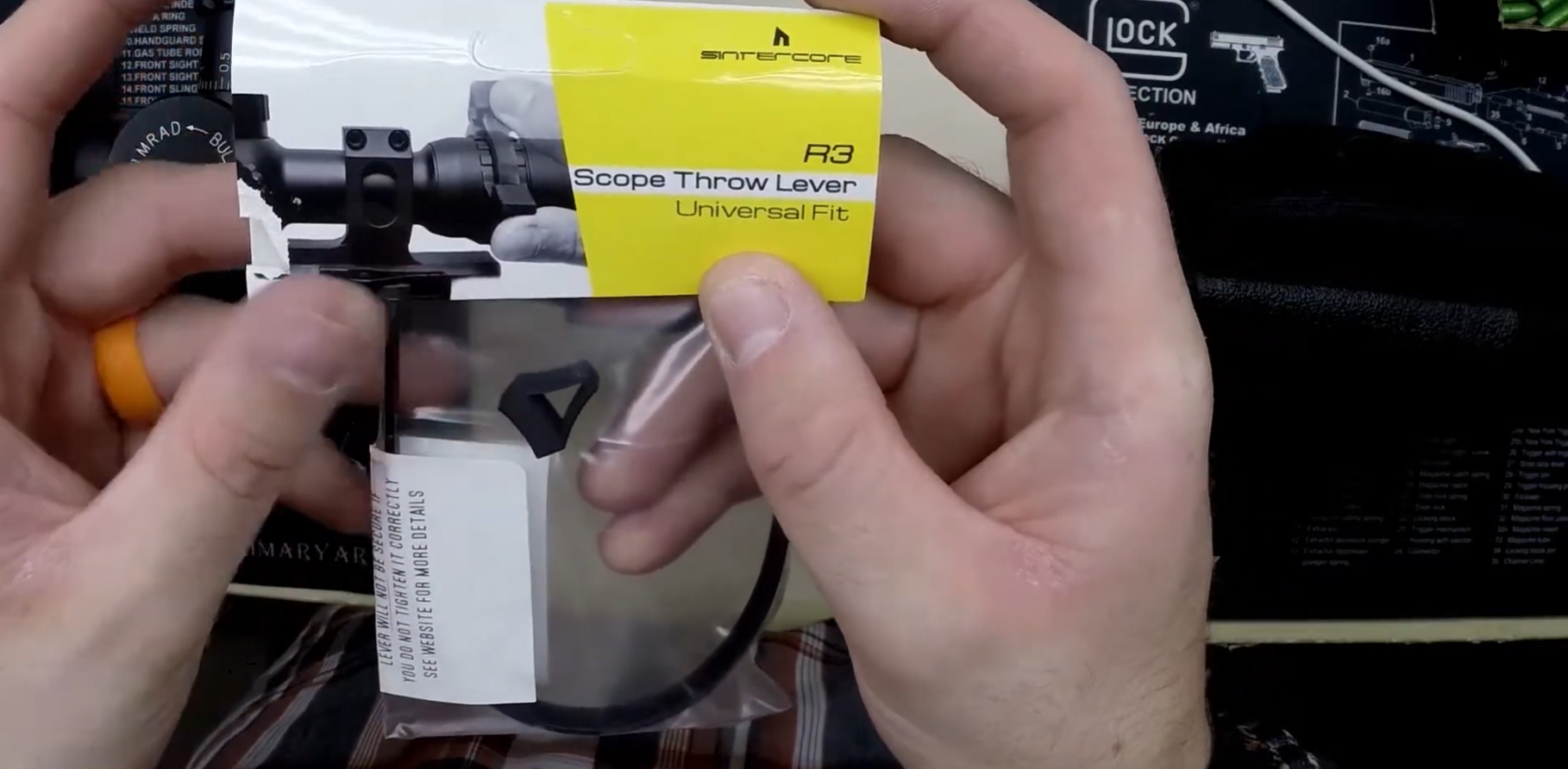
- The Sintercore R3 throw lever
- Mounting strap (heavy-duty nylon)
- An additional spare strap
The mounting strap functions similarly to a zip tie, but it’s significantly more durable. It’s made from high-quality nylon, designed to handle heat and UV exposure, and is rated for around 140 pounds of tensile strength.
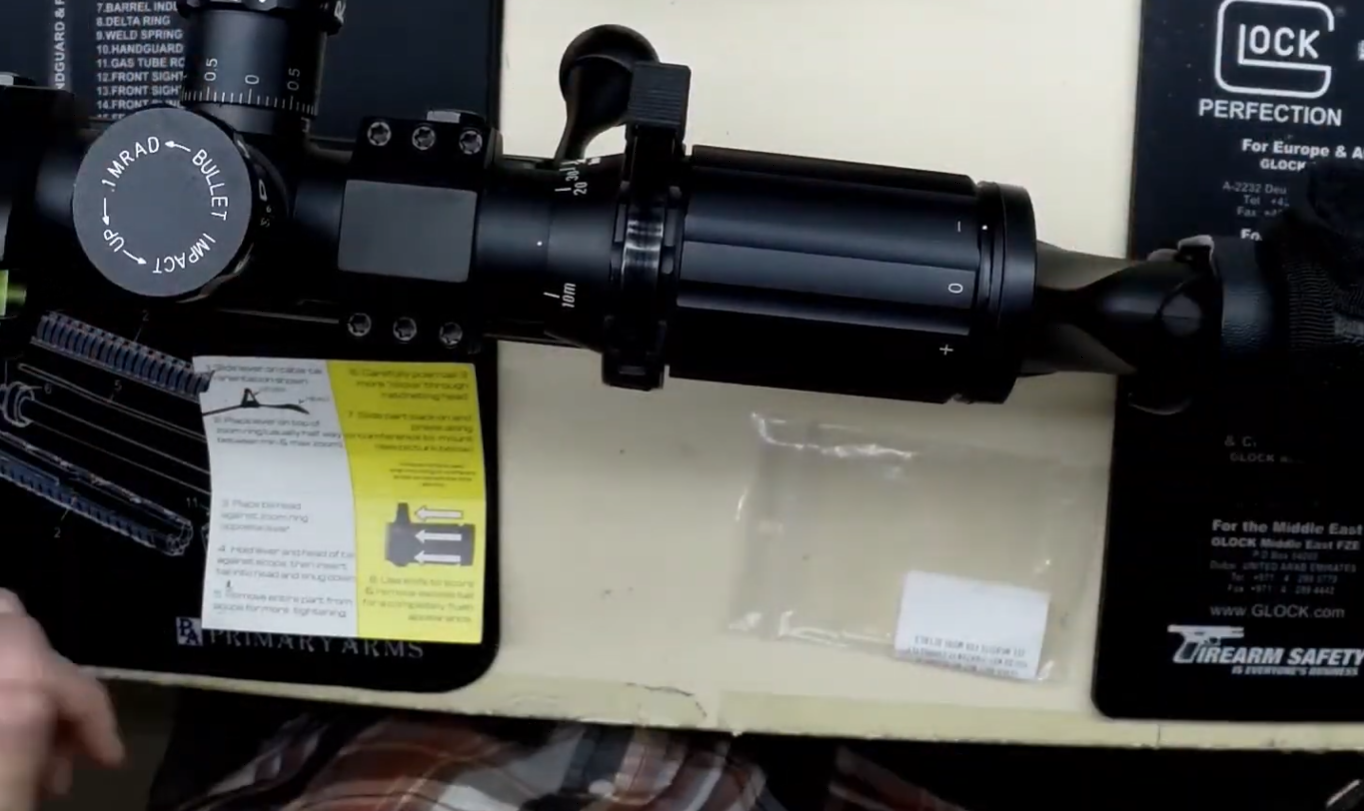
The extra strap is a nice addition, especially if you plan to swap the lever between optics in the future.
Design and Build Quality
The lever itself is made from a carbon fiber composite using a laser sintering process, which is where Sintercore gets its name.
It’s extremely lightweight but still feels solid and well-made.
One of the biggest advantages is the low-profile design. It only extends about half an inch from the scope, depending on your setup, so it doesn’t feel bulky or get in the way.
On my setup, it doesn’t interfere with the bolt at all, which is always something I check when installing a throw lever.
Universal Fit vs Dedicated Levers
I’ve used dedicated throw levers before, like the MK Machining lever on a Vortex Strike Eagle. Those are designed specifically for one scope, so the fit is perfect — but if you switch optics, you have to buy another one.
That’s where the Sintercore R3 stands out.
Because it’s universal, you can move it between different scopes without needing to replace it. If you upgrade optics or run multiple setups, that flexibility is a big advantage.
Installation
Installation is quick and straightforward.
- Wrap the strap around your magnification ring
- Position the lever where you want it
- Tighten the strap down securely
It installs very similarly to a zip tie, but with a much more refined and durable setup.
Once tightened, it stays in place and doesn’t shift during use.

Price and Value
At around $25 (at the time of filming), this is a solid value.
Considering it’s reusable, durable, and works across multiple optics, it can easily save you money compared to buying dedicated throw levers for each scope.
Unfortunately, Sintercore is no longer around. So check out these other scope levers.
Additional Notes
This product was designed by a US Marine Corps combat veteran who served in a scout sniper unit.
Sintercore also offers discounts for military, veterans, and first responders, and backs the product with a lifetime, no-questions-asked warranty.
That’s always a good sign in terms of long-term support.
Final Thoughts
Overall, this is a simple but well-designed product.
It’s lightweight, low-profile, easy to install, and the universal fit makes it far more versatile than scope-specific options.
If you’re someone who switches optics or just wants a reliable, cost-effective throw lever, this is definitely worth considering.
If you have any questions, feel free to reach out to me on my socials: